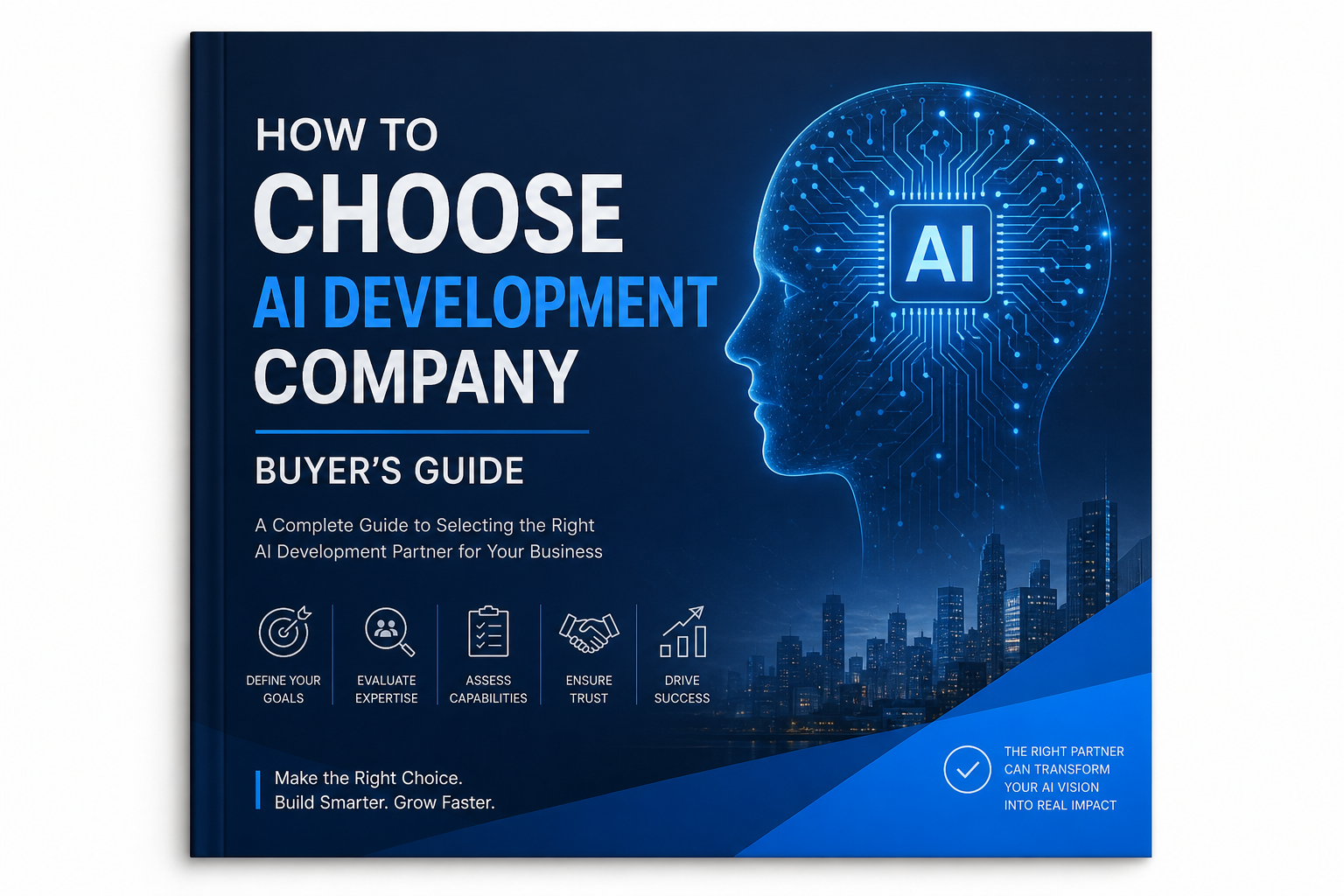
Key takeaways
- Prefer partners who ship production agents with evals — not demo chat UIs.
- Demand US timezone overlap, written IP assignment, and clear subcontracting disclosure.
- Compare fixed-scope discovery + build vs vague hourly retainers.
- Ask for a sample architecture, risk register, and 30-day post-launch plan.
Evaluation Criteria That Matter
- Production proof — case studies with metrics, not just screenshots
- Stack honesty — Claude, OpenAI, RAG, MCP, observability — and when not to use them
- Security posture — data residency, secrets handling, audit logs
- Delivery model — discovery → fixed proposal → weekly demos
- US overlap — EST/CST/PST standups without 12-hour lag
Also read: Hire an AI development company · How to choose · Why GKAI Studio.
Red Flags
- “We’ll fine-tune GPT on all your data” as the first recommendation
- No plan for evals, monitoring, or human escalation
- Offshore-only delivery with no US-facing PM
- Open-ended T&M with no milestone acceptance criteria
Questions to Ask Every Vendor
- Show an architecture for our exact workflow — tools, models, failure modes.
- Who owns the code, prompts, and eval sets after launch?
- How do you measure quality weekly after go-live?
- What happens when the model provider changes pricing or APIs?
How GKAI Studio Engages
We run a paid discovery, deliver a fixed build plan, and ship with US timezone overlap from Houston. Explore AI Agent Development, Our Process, and book a call.
FAQ
For production agents with CRM write-back and compliance, a studio with process and QA usually reduces risk vs a single freelancer.
Fixed scope after discovery is healthier for MVPs. Use retainers for ongoing features once production is stable.
Not for most applied agent projects — you need product owners and reviewers more than researchers.
Ready to build with GKAI Studio?
We ship custom AI agents, SaaS platforms, and software for US startups and enterprises.
Book a Discovery Call