Key takeaways
- TypeScript is the default for new US SaaS and AI codebases in 2026.
- Plain JavaScript still fits quick scripts and legacy migrations.
- Type safety pays off fastest on teams of 2+ engineers sharing APIs.
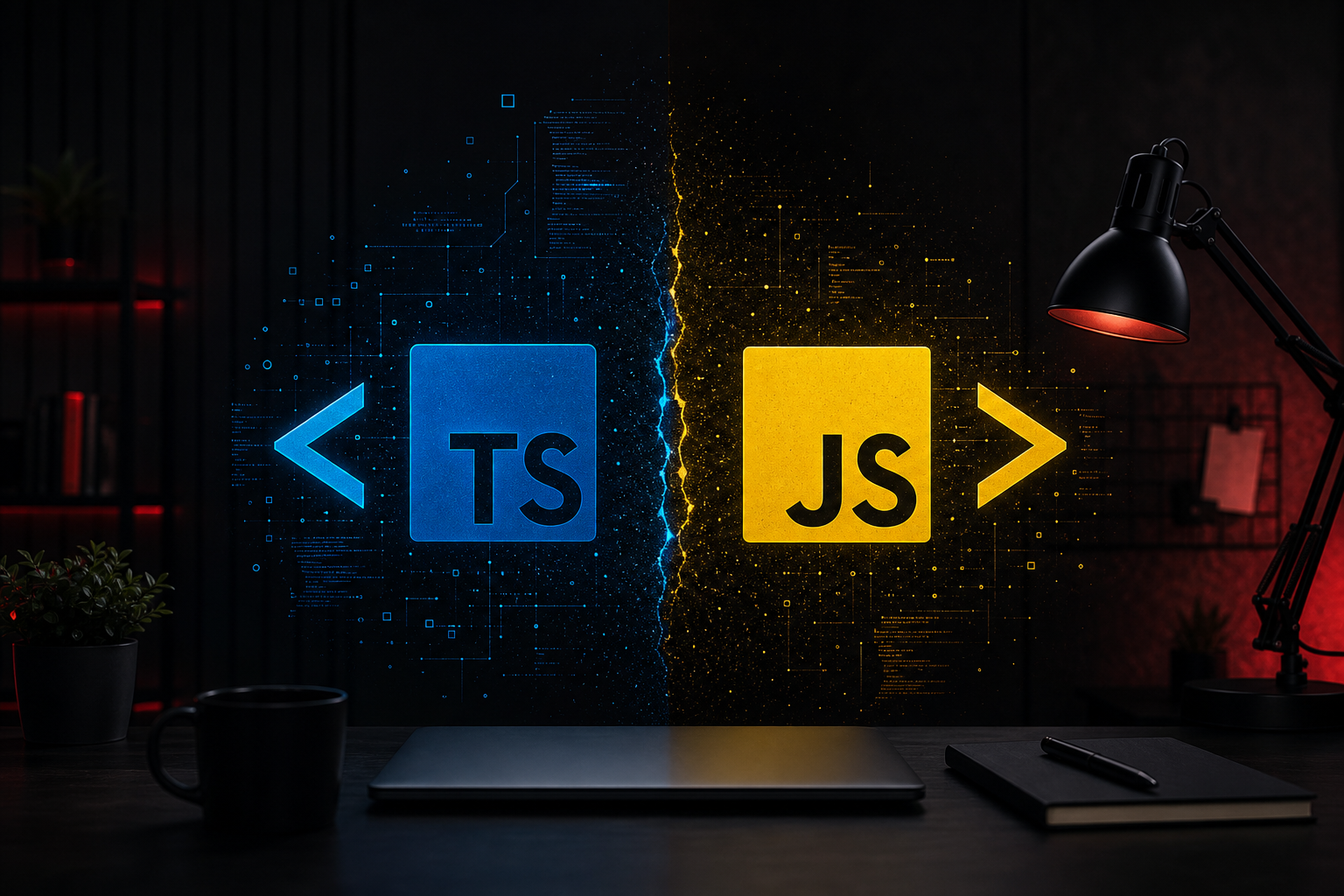
TypeScript vs JavaScript in 2026
Every US startup picking a JavaScript stack faces the same question: TypeScript or plain JS? GKAI Studio defaults to TypeScript for React, Next.js, and Node.js projects — but the answer depends on team size, timeline, and codebase age.
Read our full TypeScript vs JavaScript comparison for a side-by-side table.
When TypeScript Wins
- Multi-engineer SaaS with shared API contracts
- AI products with complex tool schemas and RAG pipelines
- Long-lived codebases where refactors are inevitable
- Next.js App Router with server components
TypeScript catches integration bugs at compile time — especially valuable when connecting Stripe, CRM APIs, and LLM tool definitions.
When Plain JavaScript Still Makes Sense
- Single-file automation scripts and internal tools
- Gradual migration from legacy JS codebases
- Very early prototypes with one developer and a 2-week deadline
Even then, add JSDoc types or migrate module-by-module rather than rewriting everything at once.
Building a startup MVP? See our AI MVP development services and Next.js vs React guide.
FAQ
Yes for product codebases with more than one engineer or any plan to scale. Scripts and throwaway prototypes can stay in JS.
Initial setup adds days; long-term velocity improves through fewer production bugs and better IDE support.
Yes. GKAI Studio migrates incrementally — enable strict mode file by file without stopping feature work.
Ready to build with GKAI Studio?
We ship custom AI agents, SaaS platforms, and software for US startups and enterprises.
Book a Discovery Call