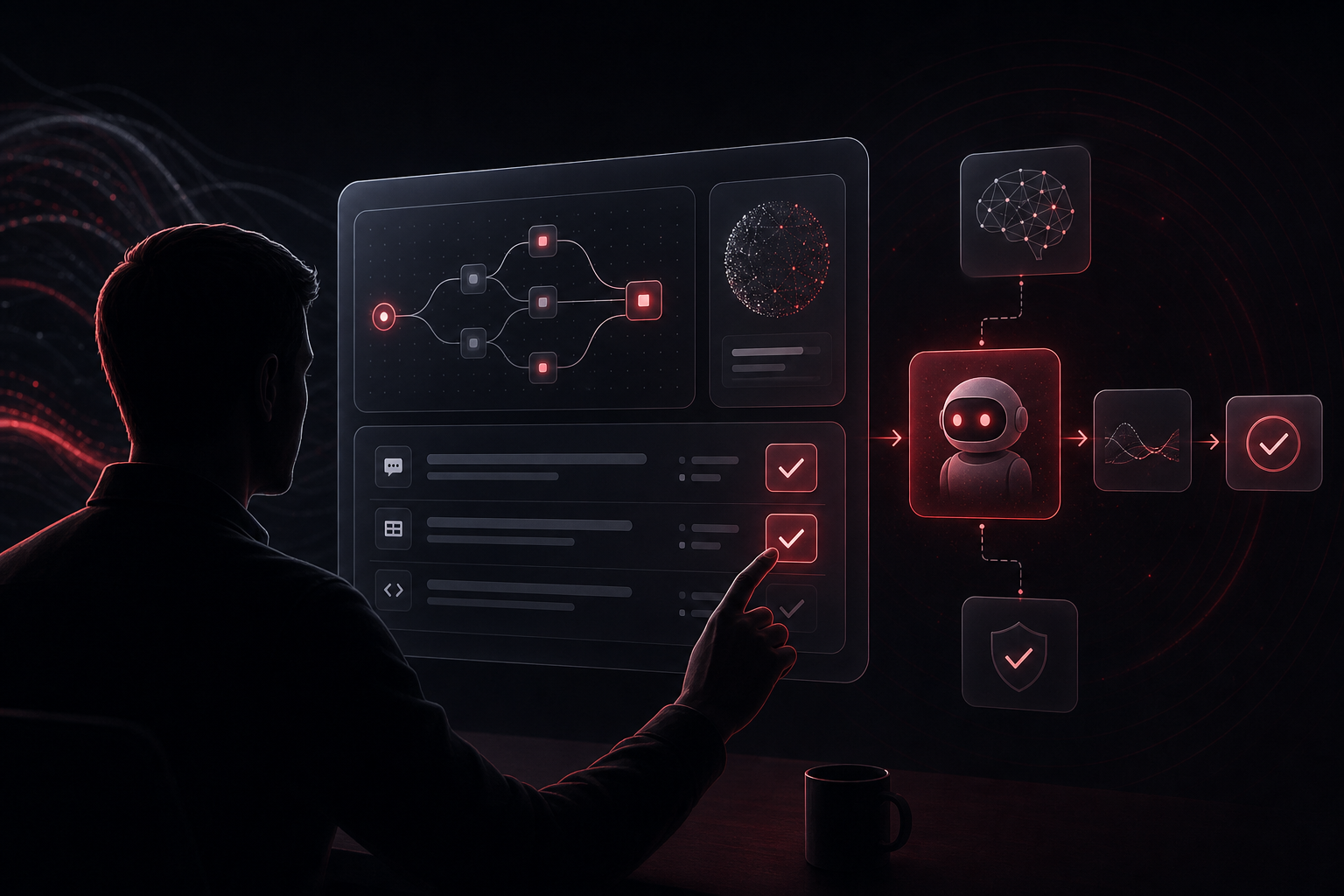
Key takeaways
- Start with one high-ROI agent before adding a multi-agent mesh.
- Supervisor + specialist patterns beat chaotic peer meshes for most SMBs.
- Shared memory and clear handoff contracts prevent loop failures.
- Multi-agent systems raise eval and observability requirements sharply.
When One Agent Is Not Enough
A single AI agent can handle support deflection or lead qualification well. Multi-agent systems make sense when you need specialized skills — research, CRM writes, compliance checks — without stuffing every tool into one bloated prompt. GKAI Studio designs these under Multi-Agent Systems engagements.
Architecture Patterns That Work
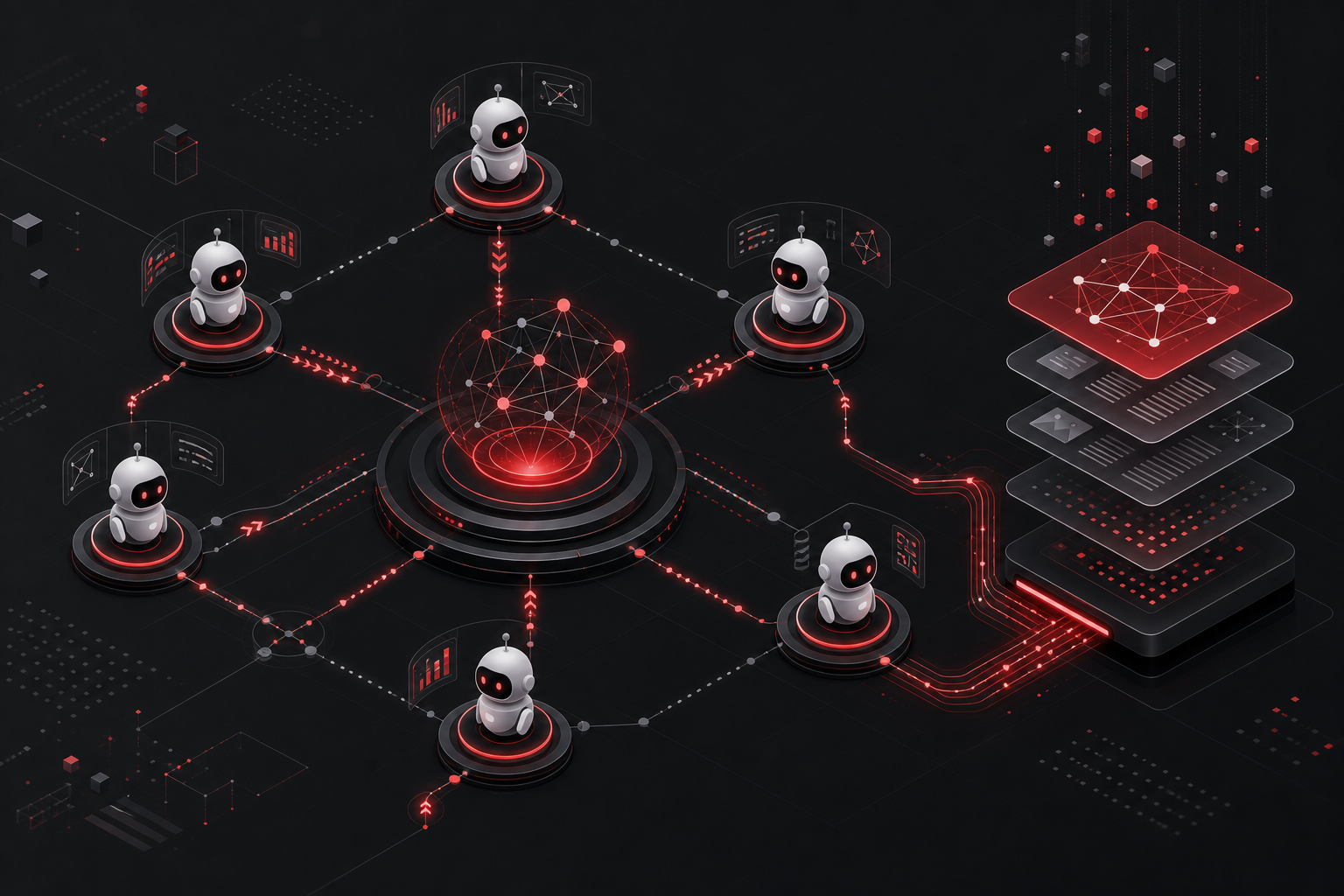
- Supervisor agent — routes tasks to specialists (support, sales, ops)
- Pipeline agents — ingest → classify → draft → HITL approve
- Tool specialists via MCP — CRM agent, docs agent, billing agent
Orchestration often uses LangGraph — see LangGraph development and MCP guide.
Shared Memory and Handoffs
Failures usually come from broken context: Agent B does not know what Agent A already promised the customer. Use a shared session store, explicit handoff payloads, and CRM as the system of record. RAG remains the knowledge layer; do not duplicate docs inside every agent prompt.
Ops Reality Check
More agents mean more eval cases, more latency paths, and more ways to loop. Budget observability early — traces per agent hop, cost per run, and escalation rate. For many US SMBs, a rock-solid single agent still beats a fragile mesh.
Compare stacks in OpenAI vs Claude. Scope a build via contact.
FAQ
Usually no. Prove one workflow, then split specialists only when a single agent becomes hard to eval.
Often 30–70% above a focused MVP due to orchestration, memory, and eval surface area.
Yes for write actions — each specialist should respect the same approval policy.
Ready to build with GKAI Studio?
We ship custom AI agents, SaaS platforms, and software for US startups and enterprises.
Book a Discovery Call